4/Cf4apdqJ0FYSO4yRyb2tIKNu_rpxkY0EwShvogyCArY
All Posts By

admin

Acting is Easy

By | Acting, Shakespeare | No Comments

Ruff’s Artistic Director, Brendan McMurtry-Howlett, has been on a ‘sabbatical’ of sorts out west, taking part in the Banff/Citadel Professional Theatre Program. The program has two stages – a four-week residency at the Banff Centre for the Arts and then two months working on a production for Edmontons Citadel Theatre’s main-stage season. In his case, Brendan is preparing to play Romeo, in Romeo & Juliet, which opens April 5th (show info). He learned many lessons, which he plans to share with the company and put into practice this summer when he directs Ruff’s show. Here, Brendan shares one the biggest takeaways he had from the training.

Acting is Easy:

Well actually, I should say acting is easeful; though this is easier said than done. This is something that our two voice coaches, Susan Stackhouse and Alana Hawley, emphasized during my time at Banff and one of the most important lessons I took away from my time there.

As a kid I played a lot of sports in school. I was never particularly skilled at anything I couldn’t catch a football to save my life, but my advantage was that I was a damn fast runner. I pushed myself in this  always running faster, harder. The lesson I took away was that if you want to get better at something, then just work harder, use more muscles, sweat more and you’ll eventually be better. This lesson has served me well in life so far, but the problem is that I’ve also applied it to my acting.  Unfortunately it doesn’t quite translate. Acting requires quite a bit more subtlety than that. Straining every muscle in your body won’t necessarily take you to the emotional place that Hamlet requires. In fact, so I’ve found during my time in Banff, it might actually prevent you from getting there.

My early sports lessons have translated into a tendency in my acting to work too hard at showing people how “good” an actor I am. This frequently means lacing every muscle in my body with as much tension as possible. For myself, I imagine it also comes from a feeling that who I am and what I’m feeling isn’t interesting or good enough to watch on stage. The result, though, is that who I am gets buried underneath all of those over-working muscles and that is definitely not interesting to watch on stage.

Muscles protect us. If we’re getting punched or hitting streetcar tracks and flying over our handle bars, flexed muscles protect us from breaking bones or damaging precious internal organs, but on stage, protection is the last thing we want, especially when it comes to accessing emotions. The goal is always to be as naked and vulnerable as possible, so that we can react honestly and emotionally to what happens to our characters in the course of a play. I guess this is why voice teachers are always doing so much relaxation work with actors.

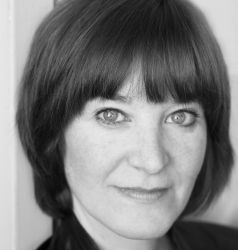
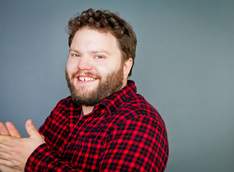
Brendan-McMurtry-Howlett-Headshot_Theatre

One of my big “Ah-ha” moments during my time in Banff came while working with James MacDonald and Alana Hawley on a speech from Hamlet (Act 3, Scene 4 – Look here upon this picture…). I’m sure I’m not the only actor out there who sometimes carries tension in their shoulder and jaw muscles and working on this speech was no exception. There I was, a good student hitting all my line endings (thank you James), and discovering all my thoughts, but I wasn’t connecting to what I was saying in any kind of emotional way. Instead, I was flapping my arms around and reaching my head forward like a sprinter trying to get his nose across the finish line before anyone else.

Eventually, Alana came up and gave my neck and jaw a gentle massage, releasing the insane amount of tension held there. I went back at the speech, trying to consciously release it. At a certain point in the speech, I felt my neck tense and my shoulders ride up to my ears. I took a moment and relaxed and instead of leaning forward, I stood tall and continued. All of a sudden, stuff just started pouring out of me – I was blubbering away like a baby, tears and snot flowed out of me, but I was still riding the text like a beautiful wave of words and thoughts. It was unreal. I was one of the most pure moments of connection and “acting” I’ve ever experienced and it all came from simply relaxing.

Of course, when I did the speech again the next day all that tension was back and I couldn’t summon a single tear, even if my life had depended on it. I was trying to recreate that same moment and the more I tried, working it like an athlete, the further away I got from it. I was frustrated, but James reminded me that the emotional connection is the hardest part of acting and takes an entire lifetime to develop. One of the things he likes to say is “The only thing that is guaranteed to make you a better actor is age,” meaning, the more life you live, the more experiences you have, good and bad, the more emotional reference points you have in your acting. So thank you, James. I’ll take that small victory I found in Banff and keep living my life and then Ill find my way back there once I’ve lived through enough emotionally-wrenching experiences in my life. Sounds fun, right? Can’t wait.

“Ah-ha” moments are few and far between. Have you ever had one while working on Shakespeare? What does it mean for you now?

Applications are now being accepted for the Banff/Citadell Program for 2015-apply here

A Thing or Two About Shakespeare

By | Acting, Shakespeare | No Comments

We, here at Shakespeare in the Ruff, come across a myriad of Shakespeare-related material. Every month we choose some of our favourites to share with you.

March 2014:

THING ONE (& only)

It’s General Audition Season in Canada! This means that all the actors you know are dusting off their monologues, Classical and Contemporary, and getting back to basics. With that in mind, an excerpt from John Barton’s marvellous ‘Playing Shakespeare’, we watch Judi Dench (Oscar nominee last night) do the most over-done soloiloquy Shakespeare wrote for women. But watch this and you’ll see why.

[youtube_video] QxftRZ_Uzq0 [/youtube_video]
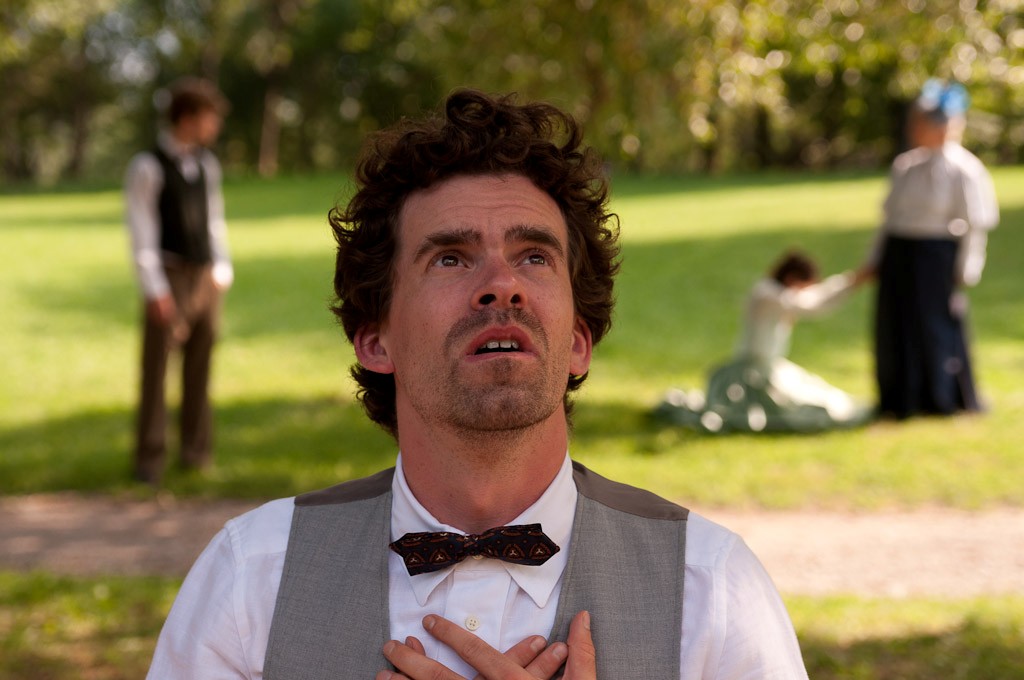
Jesse Griffiths as Valentine in 'Two Gents'

Top 10 Most Romantic lines from Shakespeare?

By | Announcements | 6 Comments

So it’s Valentine’s Day!  Like many of us here, you may be panicking because life got in the way and you didn’t get your loved one something special like flowers or chocolates or even a card. So we at Shakespeare in the Ruff decided to offer you a little help. Our resident lover, hopeless romantic (he was playing Valentine in the picture above after all) and might we add single, Jesse Griffiths, has compiled his Top Ten List of romantic lines from Shakespeare.  If you are in a pinch for an incredible romantic gesture, take a minute to memorize one of the lines below and wow your lover (or bestie), with your diction and line endings.

As an added bonus, if you can top Jesse’s selection with a love line of your own (does not have to be Shakespearean), Ruff will award you and a guest with VIP passes to our annual Ruffing It event coming up at the end of March. This will include free admission, reserved seats and a round of drinks on us! Post your love line in the comments section before the end of Valentine’s Day for your chance to win.

Happy Valentine’s Day from Shakespeare in the Ruff! 

1. Romeo and Juliet

My bounty is as boundless as the sea,

My love as deep; the more I give to thee,

The more I have, for both are infinite.

2. The Tempest

Hear my soul speak:

The very instant that I saw you, did

My heart fly to your service.

3. As You Like It

If thou remember’st not the slightest folly

That ever love did make thee run into,

Thou hast not loved.

4. Sonnet 116

Love alters not with his brief hours and weeks,

But bears it out even to the edge of doom.

If this be error and upon me proved,

I never writ, nor no man ever loved.

5. Hamlet

Doubt thou the stars are fire;

Doubt that the sun doth move;

Doubt truth to be a liar;

But never doubt I love.

6. Love’s Labour’s Lost

When Love speaks, the voice of all the gods

Makes heaven drowsy with the harmony.

7. Venus and Adonis

Love is a spirit all compact of fire.

8. Romeo and Juliet (there had to be at least 2 from this play)

Love goes toward love as school-boys from their books,

But love from love, toward school with heavy looks.

9. Twelfth Night

If music be the food of love, play on;

Give me excess of it, that, surfeiting,

The appetite may sicken, and so die.

10. Cymbeline 

I can express no kinder sign of love, than this kind kiss.


You got something better? We’d love to hear it.

A Thing or Two About Shakespeare

By | Shakespeare | No Comments

We, here at Shakespeare in the Ruff, come across a myriad of Shakespeare-related material. Every month we choose some of our favourites to share with you.

February 2014:

THING ONE

From the same people who brought you The (new) Globe Theatre on London’s South Bank, we now have another destination; the recreation of an indoor Jacobian theatre called The Sam Wanamaker Playhouse. The King’s Men (the final incarnation of Shakespeare’s company) performed at The Blackfriars, starting in 1608, and it required hundreds of dripping candles to keep the actors visible. We’re pleased to share that the new one is up and running and the first performance took place in mid-January. For more details, check out this article from The Guardian.

Oh, and they still light the place with candles…here’s how:

[youtube_video] nU92wfyW31o [/youtube_video]

THING TWO

Dave Matthews puts his own spin on one of Shakespeare’s tunes from Twelfth Night. A haunting take on ‘Come Away Death’ and a reminder of how versatile this language can be:

[youtube_video] fdPsXZNqKA8#t=11 [/youtube_video]

Know of any contemporary versions of Shakespeare’s songs we should hear?


A Tale of Two Understudies

By | Acting | No Comments

Being an understudy used to be a right of passage for any actor working in the theatre. That’s how many people got their start in the business; a kind of trial by fire experience that could be the making or breaking of any actor. These days, however, an understudy is a luxury that very few theatres can afford anymore, and being an understudy is not something that was ever covered in theatre school…trust us.

However, actors get sick, actors get hurt, actors get drunk, or at least they used to anyway, and understudies will always be needed. This past season, Shakespeare in the Ruff Company Member, Kaitlyn Riordan, was at The Stratford Festival where she understudied two hefty roles and James Wallis, Shakespeare BASH’d founder and Artistic Director, found himself as an unexpected understudy in his own production of ‘Romeo & Juliet’.

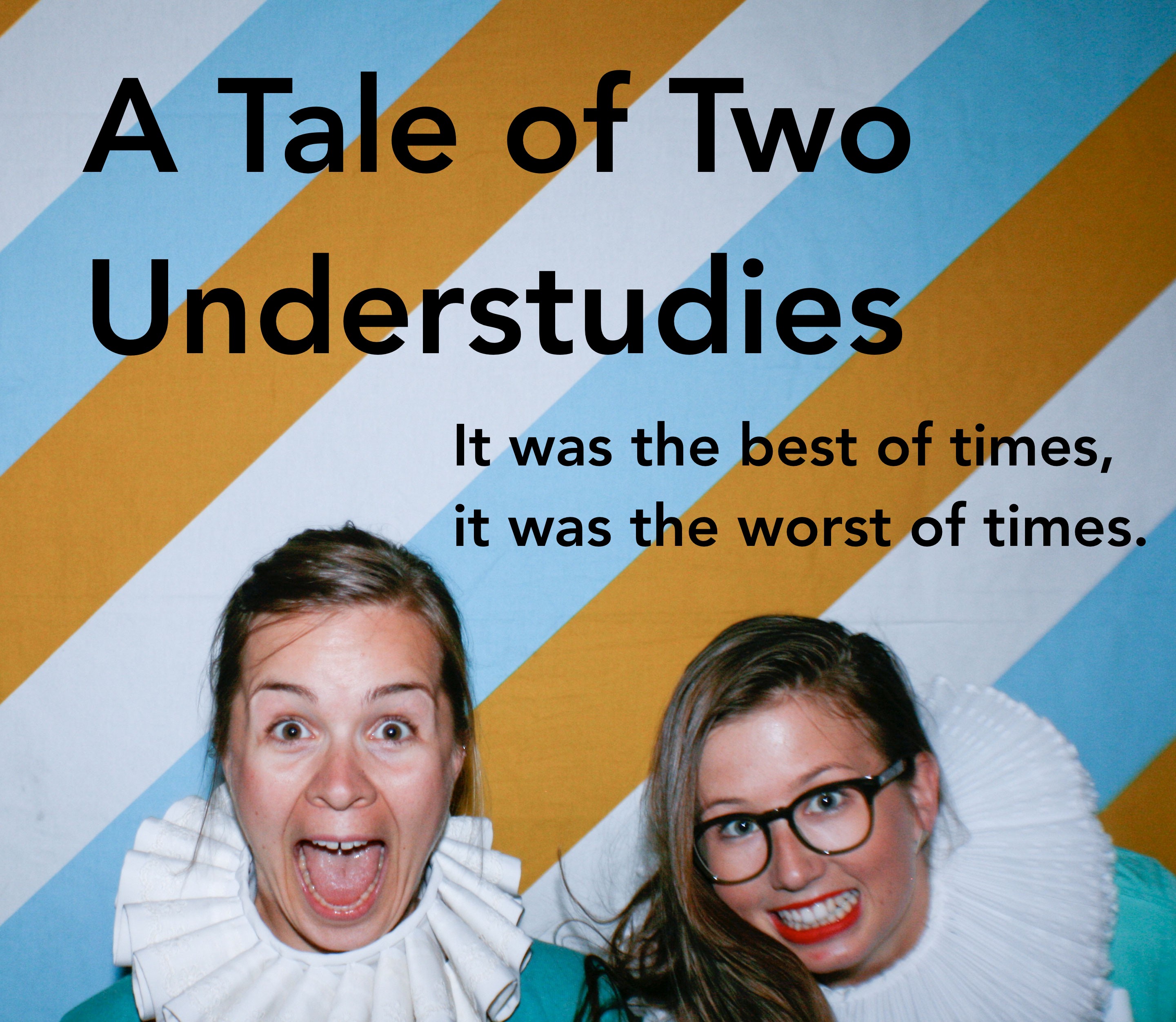
Kaitlyn:Founding & Core Member

I spent a huge portion of my time this passed season learning lines and then rehearsing them alone, in my living room. Being an understudy required an enormous amount of self discipline, especially when the parts you’re covering have so much to say! I went into it without really knowing how it was done and what was off-putting was that no one had any definite answers for me. Where do you begin? Do you make all the same choice as the other actor? How do you go on stage in front of 1800 people and play Portia in ‘The Merchant of Venice’ having had only 4 rehearsals? The nuances of it were trusted to me to decipher, but the technicalities of the process it were this:

-Understudy line run half way through the rehearsal process (we sat in a circle and spoke our memorized text)

-Two blocking rehearsals (led by our Stage Manager, when copious amounts of notes are taken,)

-Two rehearsals on the stage (led by the Assistant Director and, in the case of The ‘Merchant of Venice’, took place on the Festival Stage at Stratford, one of the most magnificent stages I have ever been on. We do a run and get notes. I never thought I’d be so happy to get notes.)

And that’s it. Of course the scope of the work that I did on my own was vast, but what became clear to me was how valuable the rehearsal process is. Just having those words in you is thrilling, but then you have to be sure to keep them in you, because a show can run for months. Lots of understudies went on this past season, and by all accounts, did very well. I, for better or for worse, was not one of them. Many would argue, Shakespeare in the Ruff included, that Shakespearian actors probably didn’t rehearse at all, so understudying is more like the original experience. To that I say, they can keep it.

James:

6990696

To begin at the end, I would say it was the most terrifying moment of my professional life.

There’s a thin line, I believe, between excitement and terror. I straddled that line as I began this crazy journey of picking up Mercutio with 10 hours to prepare. More than straddled – I rode that line like a freakin’ dragon.

It was the third night of my company’s five-night run of “Romeo and Juliet,” which I had directed, at The 3030 in the Junction. My company, Shakespeare BASH’d, does Shakespeare in a bar to create a relaxed setting for the audience to experience the plays. We were happy and proud of our show and we were ready for another sold-out crowd!

The show was going well, but when the boys (Romeo, Benvolio and Mercutio) began their big scene, I noticed that halfway through, as Mercutio starts on his rant about “Queen Mab,” he was standing still. Up till then, Milan Malisic (who played Mercutio) had been very frantic and physical with his movements during that speech, so I was certain that something was wrong. Or maybe he was taking some of my notes of stillness? But as I saw my friend Milan limping off the stage, I knew something was up.

After the scene, I dashed backstage to find almost the entire cast huddles around Milan, who was clutching his ankle in pain. However, the show would go on. And with the help of my wonderful company, it did. Milan, miraculously, was able to finish the first act, basically on one leg, and as soon as Mercutio died, he was off to the hospital. I was distraught – no one should get hurt doing theatre – and after the show, I received a text from Milan saying he had torn his Achilles tendon. Which meant we were without one Mercutio.

I began thinking of how to fill the role and I soon realized that the only other option would be for me to go on which, I must say, was not an easy decision, but seemed like the best one to preserve the show. Then the cramming began. After the show, I had script-in-hand looking over the scenes. I was up most of the night working in my living room with my wife, Julia Nish-Lapidus. I was with Jesse Griffiths the next day drilling the scenes. It was as if my hand was permanently attached to a copy of “Romeo and Juliet” and I was spouting Mercutio text like a Berserker. Miraculously, I somehow knew most of it and so preparing was relatively straightforward. To my relief, the words were sticking.

First, I went for sense, trying to make sure that I knew “what, why, who” in the text, and I’m thankful that, as a company, we had taken the time to work on early in rehearsal. Then, I started to think about what I thought this guy was about. Why was Mercutio such a tremendous spirit? What was his “endgame”? By that I mean, what was he trying to achieve? On top of that, I knew that I needed to connect with the text, my fellow actors, the audience, etc. Milan had brought such energy to it, which I wanted to keep, though I knew it would have to be different. I would have to rely on the words as much as possible to propel me through the adventure of Mercutio.

I can’t explain how nervous I was. I don’t think I’ve ever experienced it before. Facing an audience with such little prep time, despite being confident that I knew the words (and being an actor primarily), was certainly not my idea of a good time. I was up there on the deck with no rehearsal of most scenes and the fear that I might just dry completely, without a hope of pulling myself out of the theatrical hole. That feeling of my blood running at its height, I will never forget. At one point at the end of “Queen Mab,” Romeo said “Peace, peace Mercutio thou talk’st of nothing.” After a moment to catch my breath I replied with “True…” I will never forget the reaction of that audience – not just the laughs (there were a few, which was nice), but also the recognition that they were with me, listening intently and understanding. “At least I was doing it right,” I thought as I chopped my way through the weeds of the next text monster.

The thing that really grounded me was that I knew I had such a great company there to back me up. My fantastic scene partners – Kelly Penner as Romeo, Kyle Purcell as Benvolio or Jeff Yung as Tybalt, amongst others – really taking care of me as we did the third act fight between Mercutio and Tybalt. And Jeff trusting that I wouldn’t stab him to death! On the second night, the nerves were less striking or at least I knew that if I had done it once I could do it again. I was trusting myself more. I was finding more and more to cling to in the text which was exciting! Too bad it was closing night.

All in all, I tried to find him within myself as fast as possible. With great help from a tremendous company I was able to have a fraction of success in the Mercutio. My final word on this experience: I never want to do it again.

 So which was the best of times and which was the worst of times? Understudies – do you wish you had gone on or are you glad you didn’t? What was it like to go on?

A Thing or Two About Shakespeare

By | Announcements

We, here at Shakespeare in the Ruff, come across a myriad of Shakespeare-related material. Every month we choose some of our favourites to share with you.

January 2014:

THING ONE

In celebration of the return of Sherlock this month (a favourite amongst us Ruffians), check out this audio clip of Benedict Cumberbatch performing ‘The Seven Ages of Man’ from As You Like It.

[youtube_video] YM8LAbuateI [/youtube_video]


THING TWO

Shakespeare to stay put here in Canada. The Sanders portrait of Shakespeare is likely being sold to a Canadian family with plans to exhibit it at one of our major art institutes.

READ GLOBE & MAIL ARTICLE HERE


AND ANOTHER THING

In honour of Peter O’Toole’s passing last month, we wanted to share a fascinating conversation he had with Orson Welles about Hamlet, as seen on the BBC’s Monitor in 1963. At the time, he was playing the title role in The National Theatre’s inaugural production, directed by Laurence Olivier. O’Toole and Welles, along with a couple of the hosts, discuss the various approaches that people have taken in playing The Dane, as well as some of the big questions that every director has to grapple with when approaching the play. Intelligent and funny, this clip serves as a reminder of what captivating men both O’Toole & Welles were.

[youtube_video] smMa38CZCSU [/youtube_video]

Anything you think we’d like, please let us know in the comments.


The Richard Series Part 3: Tom McCamus

By | Acting, Richard III

In the final instalment of our Richard Series, we speak to Tom McCamus, who played Richard at The Stratford Festival in 2002 and is currently spending his 13th season at the Festival, playing Friar Laurence in ‘Romeo & Juliet’ and Antonio in ‘The Merchant of Venice’.  In our series, Tom arguably brings the most traditional approach to the role of Richard III, but as anyone who has seen Tom act can attest to, his invention and perspective are anything but conventional.  

1-What was your relationship with the audience while playing Richard and did it change throughout the play?

Particularly at the beginning of the play, I spoke to the audience. Someone told me once that the best way to do that kind of thing, if you’re playing Richard III, is to imagine that the whole audience is made up of Richards, the assumption being that they all agree with you, so that you’re not trying to convince anyone. And that’s what I thought about and it made me laugh and it worked out well, because he’s such a fabulous, theatrical character. The connection with the audience diminishes as the play goes on, but I did this one thing throughout with a list – as I talked about all the people who were dead, I’d cross them off the list. Towards the end, I crossed the wife off and that was pretty direct to the audience, but by that point, Richard actually wasn’t looking for anything from them. I feel like he cuts them out partly because he’s becoming more and more concerned about everything falling apart around him to be too much aware of the audience.

2-How did you develop the physicality of the part and what informed your choice?

I kept talking to people when I first got the part and they’d ask, ‘Are you gonna have a hump?’ and I’d think, ‘Of course I’m gonna have a hump; if you’re playing Richard III, you’re gonna have a hump.’ But I used to say to them, ‘Oh no, no, no – we’re gonna start the play sitting at a desk and he’s gonna look totally normal, talking to the audience, and then halfway through the scene he’s gonna get up from the desk and he’s gonna have the biggest bum you’ve seen in your whole life and then he’ll spend the entire play having to turn sideways to get through doors.’ That made me laugh a lot, but then somebody said, ‘Careful – if you tell Martha (Martha Henry, the director), she might actually suggest you do that.’

Ultimately, for the physicality, I had a hump, but it wasn’t huge – it was more of a small deformity – and I also played with various degrees of Cerebral Palsy. I did the play ‘Creeps’ a long time ago, so I had explored that type of physicality and that kind of fit with Richard. My basic premise was that it came and went, depending on what he wanted from people. So, if he wanted more, the hump would be bigger, because it would elicit a certain amount of pity and then nobody would think he was a threat. He was like a dog that everybody kicked out of the way and before they knew it, boom, he was there.

3-Did anything surprise you about playing the role?

Everything. I didn’t know a lot about it when I went to play it, so I was surprised by how funny he was, how theatrical, how different he was from everybody else in the play, just in the writing of it and in the character of it. I was surprised that he really had no feeling for anything or anybody, other than himself. It’s a pretty early play and there’s a lot of verse and structure to it, but Richard’s kind of outside of that structure.

Another surprise is the way people reacted to things I did. They often said, ‘Why does he fall (out of a tree at the beginning and during the coronation)?’ or ‘You shouldn’t have done that,’ about all kinds of things I thought were great. Part of it, especially with Shakespeare, is that people have such a strong idea of what it should be and if what you do doesn’t fit, they don’t always embrace it, and that surprised me. Most of the Shakespeare I’ve done, I’ve discovered, they haven’t been roles I’ve always wanted to play and so I just do whatever comes to me.

Tom McCamus' RIII

Ruff’s ‘Richard III’ is playing from Aug 13th-Sept 1st in Toronto’s Withrow Park. All the information can be found at www.shakespeareintheruff.com. 

The Richard Series Part 2: Tim Welham

By | Announcements

In the second installment of our Richard Series, we confer with Tim Welham, who is currently reviving his one-man adaptation of Richard III, ‘Crookback’. Originally wowing Toronto audiences in 2010, ‘Crookback’ plays this month at The Etcetera Theatre in London, England where Tim recently completed his Masters at The Central School of Speech & Drama. Playing not only Richard, but every part in the play, Tim brings a unique and multifaceted perspective to our Richard Series.

1-What was your relationship with the audience while playing Richard and did it change throughout the play? 

We (director Megan Watson & myself) used Richard’s unique soliloquies, and his incredibly intimate relationship with the audience, as a springboard for the concept of our adaptation. So right from “Now is the winter”, we invite the audience into Richard’s mind, and the soliloquies act as a kind of confessional with the audience members. For me, the beginning monologue is always the hardest. Since each audience is different, each performance requires many subtle shifts in intention, focus, and address. I tend to speak directly to audience members when I play Richard, and some people find this quite disconcerting at the beginning of the show! So it takes a while to warm the audience to the concept and for them to feel comfortable inside Richard’s head. However, as the play progresses and the action grows, I’ve noticed most people end up encouraging Richard, and willing him to victory. It’s an interesting change – and one that Shakespeare deals with very well in his writing. By the time we get to the final soliloquy, after the famous nightmare on the eve of the Battle of Bosworth, Richard asks many more questions of the audience and is, essentially, begging them for a response – he is desperate for answers. Shakespeare’s use of short (sometimes incomplete) sentences and questions forces Richard into a kind of self-reflective state, and in turn jarrs the audience into reconsidering their own views of this very troubled and lonely man.

2-How did you develop the physicality of the part and what informed your choice?

The physicality! Well, for me to first begin creating a unique body, I needed to research what other actors had done before. The most memorable are probably Laurence Olivier’s 1955 hopping crow (mainly because it was one of the first to be preserved on film), and Antony Sher’s 1984 spider for the RSC (Royal Shakespeare Company). Olivier’s is a difficult shadow to dodge, since his portrayal is so prevalent in our cultural consciousness, and Sher’s version is probably the pinnacle of physical dexterity. So, I went down the middle. Taking clues from Shakespeare’s text (not historical references), I ended up with my left arm in a sling, walking with a slight limp of the left leg, and curving my head and spine slightly to the left as well. The idea was to portray a slight compression & twist in Richard’s spine – perhaps the result of scoliosis? – that slowly amplified throughout the play. All of my clues came from the text, and mainly from names and descriptions of Richard by other characters.

3-Did anything surprise you about playing the role? 

At the beginning of the process, I had an image of Richard as a gleeful, mischievous murderer without much of a moral compass. I thought he would spend most of his time in a state of high adventure – like Commander of a frigate on the high seas chasing a pirate ship. In the end, I discovered that much of Richard’s drive to life comes from a place of incredible loneliness and sadness. He has been, essentially, disowned by his mother and shunned by the rest of his family. He has never really known love. I found this to be the core of Richard’s character: his desperate need for love, comfort and understanding. And this came to a head during his final soliloquy on the eve of Bosworth where he says “I shall despair, there is no creature loves me, / And if I die, no soul will pity me.” He is human, and like all of us, wants to love and be loved in return. His tragedy is perhaps that it took him too long to realize that.

Tim Whelam's RIII

Next in our Richard Series, Tom McCamus recounts discovering the role of Richard III at The Stratford Festival in 2002. Ruff’s production of ‘Richard III’ is playing Aug 13th-Sept 1st in Toronto’s Withrow Park, all info at www.shakespeareintheruff.com