Being an understudy used to be a right of passage for any actor working in the theatre. That’s how many people got their start in the business; a kind of trial by fire experience that could be the making or breaking of any actor. These days, however, an understudy is a luxury that very few theatres can afford anymore, and being an understudy is not something that was ever covered in theatre school…trust us.
However, actors get sick, actors get hurt, actors get drunk, or at least they used to anyway, and understudies will always be needed. This past season, Shakespeare in the Ruff Company Member, Kaitlyn Riordan, was at The Stratford Festival where she understudied two hefty roles and James Wallis, Shakespeare BASH’d founder and Artistic Director, found himself as an unexpected understudy in his own production of ‘Romeo & Juliet’.
Kaitlyn:
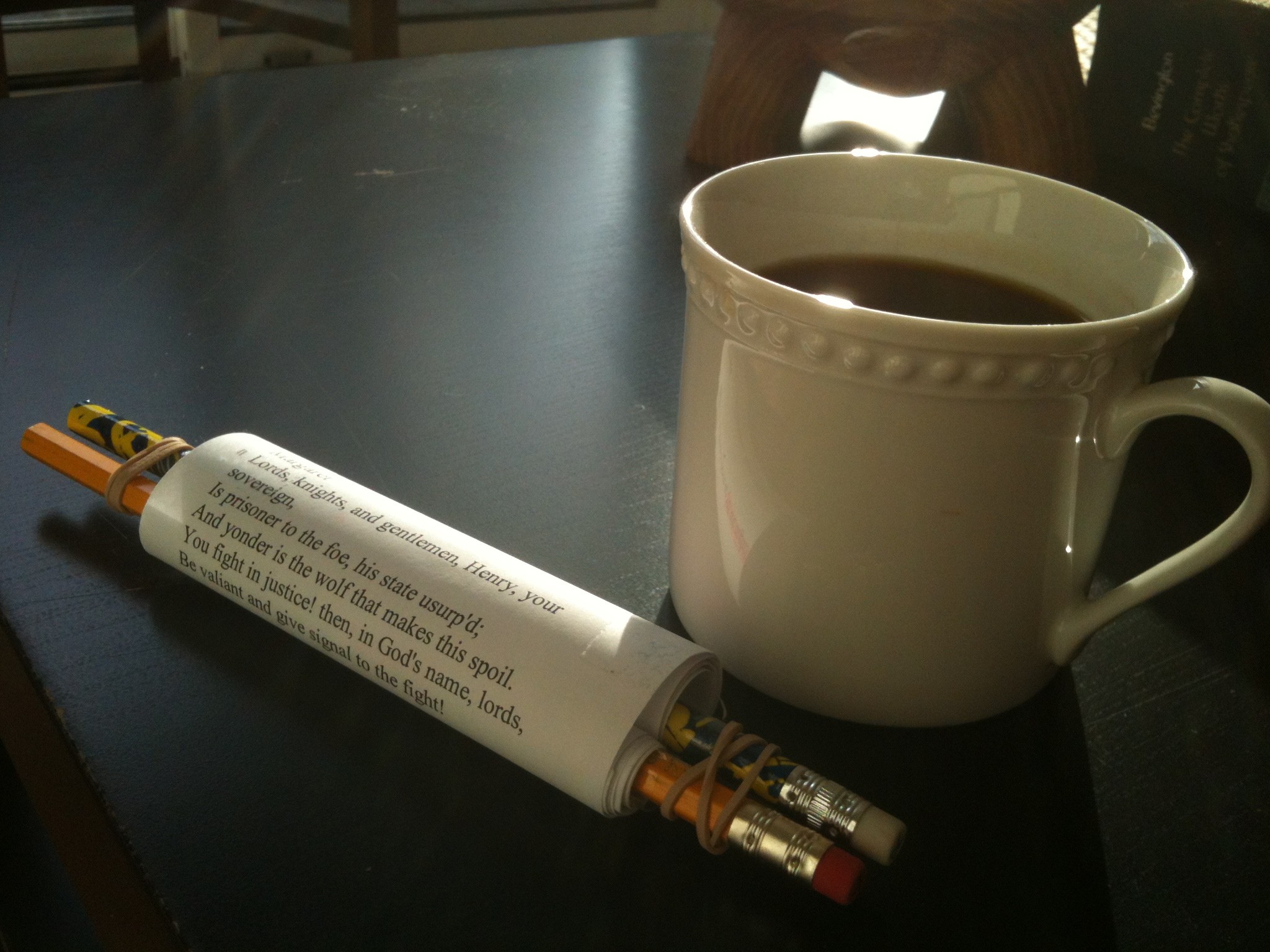
I spent a huge portion of my time this passed season learning lines and then rehearsing them alone, in my living room. Being an understudy required an enormous amount of self discipline, especially when the parts you’re covering have so much to say! I went into it without really knowing how it was done and what was off-putting was that no one had any definite answers for me. Where do you begin? Do you make all the same choice as the other actor? How do you go on stage in front of 1800 people and play Portia in ‘The Merchant of Venice’ having had only 4 rehearsals? The nuances of it were trusted to me to decipher, but the technicalities of the process it were this:
-Understudy line run half way through the rehearsal process (we sat in a circle and spoke our memorized text)
-Two blocking rehearsals (led by our Stage Manager, when copious amounts of notes are taken,)
-Two rehearsals on the stage (led by the Assistant Director and, in the case of The ‘Merchant of Venice’, took place on the Festival Stage at Stratford, one of the most magnificent stages I have ever been on. We do a run and get notes. I never thought I’d be so happy to get notes.)
And that’s it. Of course the scope of the work that I did on my own was vast, but what became clear to me was how valuable the rehearsal process is. Just having those words in you is thrilling, but then you have to be sure to keep them in you, because a show can run for months. Lots of understudies went on this past season, and by all accounts, did very well. I, for better or for worse, was not one of them. Many would argue, Shakespeare in the Ruff included, that Shakespearian actors probably didn’t rehearse at all, so understudying is more like the original experience. To that I say, they can keep it.
James:

To begin at the end, I would say it was the most terrifying moment of my professional life.
There’s a thin line, I believe, between excitement and terror. I straddled that line as I began this crazy journey of picking up Mercutio with 10 hours to prepare. More than straddled – I rode that line like a freakin’ dragon.
It was the third night of my company’s five-night run of “Romeo and Juliet,” which I had directed, at The 3030 in the Junction. My company, Shakespeare BASH’d, does Shakespeare in a bar to create a relaxed setting for the audience to experience the plays. We were happy and proud of our show and we were ready for another sold-out crowd!
The show was going well, but when the boys (Romeo, Benvolio and Mercutio) began their big scene, I noticed that halfway through, as Mercutio starts on his rant about “Queen Mab,” he was standing still. Up till then, Milan Malisic (who played Mercutio) had been very frantic and physical with his movements during that speech, so I was certain that something was wrong. Or maybe he was taking some of my notes of stillness? But as I saw my friend Milan limping off the stage, I knew something was up.
After the scene, I dashed backstage to find almost the entire cast huddles around Milan, who was clutching his ankle in pain. However, the show would go on. And with the help of my wonderful company, it did. Milan, miraculously, was able to finish the first act, basically on one leg, and as soon as Mercutio died, he was off to the hospital. I was distraught – no one should get hurt doing theatre – and after the show, I received a text from Milan saying he had torn his Achilles tendon. Which meant we were without one Mercutio.
I began thinking of how to fill the role and I soon realized that the only other option would be for me to go on which, I must say, was not an easy decision, but seemed like the best one to preserve the show. Then the cramming began. After the show, I had script-in-hand looking over the scenes. I was up most of the night working in my living room with my wife, Julia Nish-Lapidus. I was with Jesse Griffiths the next day drilling the scenes. It was as if my hand was permanently attached to a copy of “Romeo and Juliet” and I was spouting Mercutio text like a Berserker. Miraculously, I somehow knew most of it and so preparing was relatively straightforward. To my relief, the words were sticking.
First, I went for sense, trying to make sure that I knew “what, why, who” in the text, and I’m thankful that, as a company, we had taken the time to work on early in rehearsal. Then, I started to think about what I thought this guy was about. Why was Mercutio such a tremendous spirit? What was his “endgame”? By that I mean, what was he trying to achieve? On top of that, I knew that I needed to connect with the text, my fellow actors, the audience, etc. Milan had brought such energy to it, which I wanted to keep, though I knew it would have to be different. I would have to rely on the words as much as possible to propel me through the adventure of Mercutio.
I can’t explain how nervous I was. I don’t think I’ve ever experienced it before. Facing an audience with such little prep time, despite being confident that I knew the words (and being an actor primarily), was certainly not my idea of a good time. I was up there on the deck with no rehearsal of most scenes and the fear that I might just dry completely, without a hope of pulling myself out of the theatrical hole. That feeling of my blood running at its height, I will never forget. At one point at the end of “Queen Mab,” Romeo said “Peace, peace Mercutio thou talk’st of nothing.” After a moment to catch my breath I replied with “True…” I will never forget the reaction of that audience – not just the laughs (there were a few, which was nice), but also the recognition that they were with me, listening intently and understanding. “At least I was doing it right,” I thought as I chopped my way through the weeds of the next text monster.
The thing that really grounded me was that I knew I had such a great company there to back me up. My fantastic scene partners – Kelly Penner as Romeo, Kyle Purcell as Benvolio or Jeff Yung as Tybalt, amongst others – really taking care of me as we did the third act fight between Mercutio and Tybalt. And Jeff trusting that I wouldn’t stab him to death! On the second night, the nerves were less striking or at least I knew that if I had done it once I could do it again. I was trusting myself more. I was finding more and more to cling to in the text which was exciting! Too bad it was closing night.
All in all, I tried to find him within myself as fast as possible. With great help from a tremendous company I was able to have a fraction of success in the Mercutio. My final word on this experience: I never want to do it again.
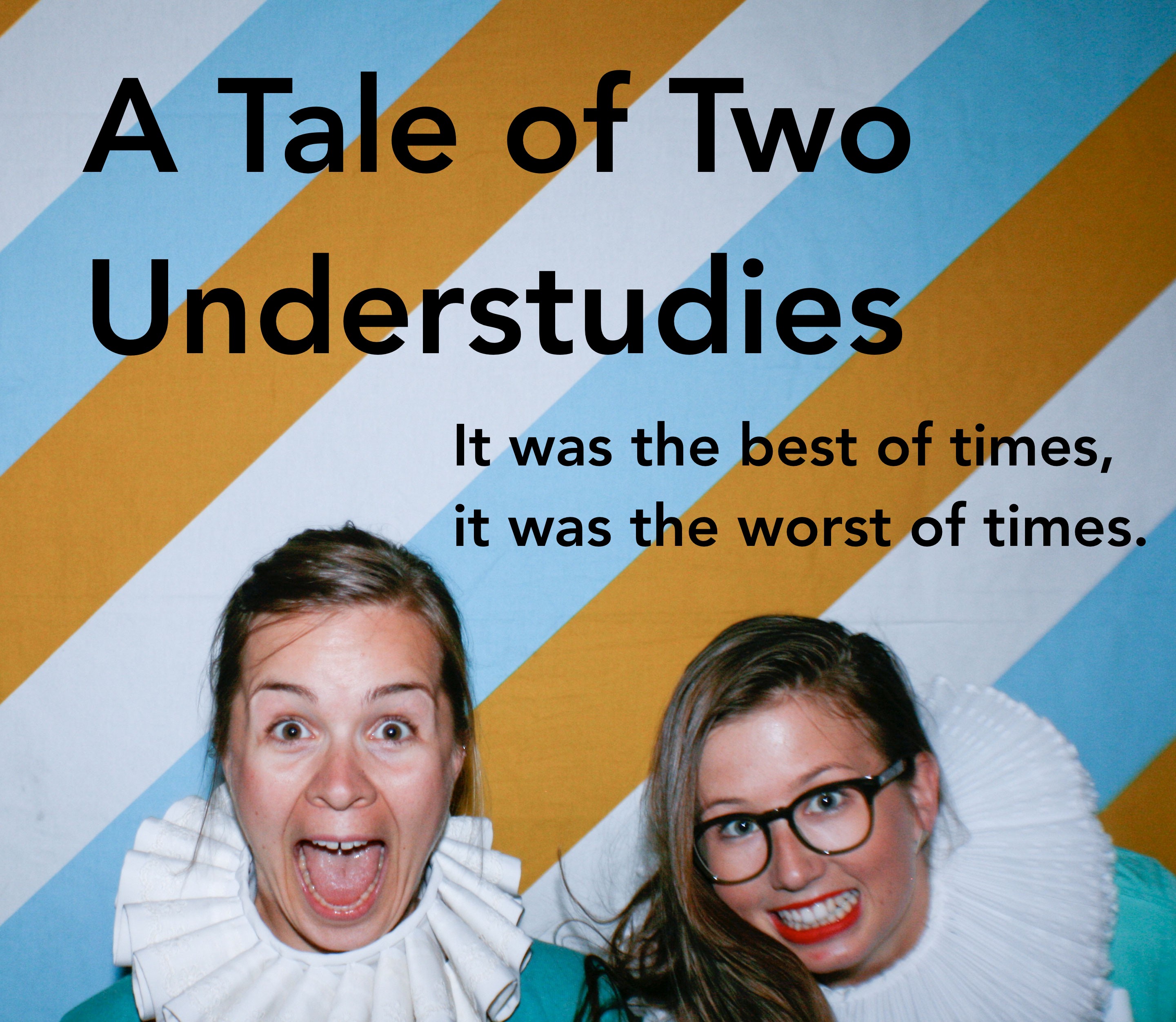
So which was the best of times and which was the worst of times? Understudies – do you wish you had gone on or are you glad you didn’t? What was it like to go on?

 Ruff: Can you describe the challenge of working this way?